~ Heritage GoGo ~

SlideShow

Showing posts with label Culture. Show all posts

Saturday, October 30, 2010

Building - Murray House


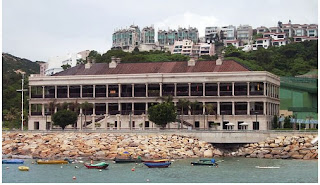
Murray House was used as an army quarters for the British Officers when it was built in Central in 1846 where the Bank of China Tower now stands. It is one of the oldest examples of Western architecture in Hong Kong. Murray House was dismantled in 1982 with its stones and components numbered and marked for its re-construction. 


After 15years in storage following ASD’s careful dismanting stone by stone in anticipation of a possible new home, it was offered a waterfront location at Stanley for rebuilding. The reconstruction work was eventually embarked in 1997. With the objective of outset to maintain the appearance of Murray House, including the surrounding verandahs, the 3000 preceved stones were first carefully examinated, dimensions measured and condition recorded. A real size mock up as trial assembly of a selected corner of the building from old materials kept was also done before carrying out the genuine reconstruction at Ma Hang.

The rebuilding was completed in the year2000 as part of Ma Hang Valley redevelopment by Housing Department. Nowadays it become  one of the poplular atrractions to tourists.


My reflection
  I have visited Murray House once with my family when I was young and my parents told me that. It is a beautiful place because it was just completed the re-construction, everything is clean and new. The environment is good and there is a good sea view. Actually I don’t remember much about that place but everyone should visit at least once because it is part of our Hong Kong history and this new Murray House examined that how to conservate some historical building in a meaningful way.
--- Jovy Tam


I have been Murray House three months ago. Outside the house, you can see that so many people like taking photos, because the view of Murray House is good. At night, there will be a romantic place for couple. They can have a seat there and face to the sea, or walk along the harbor and chat with each other etc. The atmosphere can increase the relationship for couple, family etc. Also, one thing I like most which is the air. It is fresh and I can breathe deeply. Inside the house, the design of it is very attractive, just like the old western style. People can choose the restaurant in it, but it must be an expensive meal. HAHA
--- Mable Chiu


Here are some photoes for you.


Monday, October 25, 2010

Street - Bonham Strand West


Hello everybody~!!! Today is Moday. Are you continuing to follow our blog?
Remember today topic or not?

As you see the photo, I think you can imagine what heritage I want to introduce for you. 
That right !!!^^  It is the street which called Bonham Strand West(文咸西街). The name of this street also came fron the governors in the past.

Obviously, the signage has been showing that about the Ginseng and dried seafood.

At present, along Bonham Strand West, nearly century-old ginseng and dried herbs lines, have become regular customers were very reliable "old."

The streets together with ginseng and bird's nest shop a lot, because the firm can provide one-stop service, goods are very focused, genuine, credible, this band gradually became firm's retail and wholesale ginseng and bird's nest to attract the area inside and outside, and visitors are attracted around a visit.

Actually, if you purchase the Ginseng and dried seafood in the store or shopping mall, Bonham Strand West of the entire store is wholesales all about the Ginseng and dried seafood.
Thanks for your attention!!!!
--- Jasscia Yim

Saturday, October 23, 2010

Building - Western Market

Hihi~~ All reader~
The building is beautiful, right? Yes, that is the Old Central Market (Western Market) which is located in Hong Kong Island. And it’s very valuable of the heritage nowadays. Don’t miss the chance. I am really wanted to recommend you to go there and taking some photos for your memory.

Let me tell you more about the building. The Old Central Market (Western Market) consisted originally of two separate blocks, the South Block at Queen’s Road Central was built in 1858 and demolished in 1980. Existing North Terminal was built in 1906 which is smaller and more compact in design. And the turret brick wall decorated with ribbon. When the former Urban Council’s market facilities came into operation in 1898, the market building became vacant and was later converted into traditional trades, arts and crafts center. It is now managed by the Urban Renewal Authority. The photo that you can see on your left hand side, it is the Old Central Market of 1895.

However, I think that the government may keep the culture for protecting the old history building. Do you think so?!
--- Jessica Yim

When I see this building, I think that is a private house in the past or one of the government offices in my mind. It is because I feel that building is very luxurious and grander in that district. It has kept the Britain-style; it can let me think about what happen in the past. However, I am very surprised that is a market which is converted into traditional trades, arts and crafts center nowadays. As we know, this building is one of the declared monuments in Hong Kong Island, I think that Hong Kong Government not only focus on this type of building, but also the other building which is not located in Hong Kong Island or lack of repairs. That history is one of the memories of Hong Kong’s people, and those have their own values, government can’t just focus the economic of Hong Kong and ignore those building. I think government really put more resources or attention on this condition which means to take the balance between the economic and heritage in the future. If we lose those building, we can not return to start again.
--- Change Kwok
Reference
Here is the link of Western Market.

Monday, October 18, 2010

Street - Nathan Road


Before 1997, Hong Kong was managed by the United Kingdom.
At that time, many names of street used the Hong Kong Governor's name. 
For this history, we know that the streets of Hong Kong are one of the Hong Kong Heritage.
And today, i will introduce the street called " Nathan Road". Although this is not in Hong Kong Island, it is very popular. It is the must that you need to know.

Nathan Road is one of the famous street in Hong Kong. Many tourist must pass through this street when they have visited Hong Kong. It is because Nathan Road connects Mong Kok to Tsim Sha Tsui and these two places are the attractions in Hong Kong. Tourist can have fun there.

Nathan Road is about 3.6 kilometer. It passes through Prince Edward, Mong Kok, Yau Ma Tei, Jardon and Tsim Sha Tsui. For Transportation, portions of the Kwun Tong and Tsuen Wan Lines for MTR run underneath Nathan Road.

History
"Nathan Road" was named at the nineteen of March in 1909. It comes from the Hong Kong Governor'name, Sir Mathew Nathan. He was the 13th Governor who served between 1904 and 1907. However, The road was originally named Robinson Road. It came from the 5th Governor of Hong Kong, Sir Hercules Robinson. The first section of the road was completed in 1861. It was the very first road built in Kowloon. At that time, the government want to avoid confusion with the Robinson Road on Hong Kong Island, the name was changed to Nathan Road in 1909.


Famous attractions along Nathan Road
There are some buildings and landmarks along the road. Let see the photo.^^


To know more about Nathan Road, You can click on :

Here you a video in the bus that pass through Nathan Road at night. You can see that there are still many people there.

My reflection
I am living in Mong Kok, so i have a big feeling about Nathan Road. For the transportation, it is very convinient. You can go there by bus, train, MTR etc. This is a easy-go place. You would not be afraid that you cannot go back home at night. For tourists, there are many special building and shopping places along Nathan Road. Also, some street next to Nathan Road are the popular shopping place that they must visit such as the Women's Street.  At night, this road will be being a hot place. There are many people to come and go. Nathan Road is being a cheerful street. people would like to have dinner here. It is because there are different knid of restaurants that they can choose. And i am the one inside ^^.
--- Mable Chiu
Nathan Road is one of the longest road in Hong Kong and it across from Prince Edward to Tsim Sha Tsui. There are many shopping mall like Longham Place and some special streets on the both side of street. One of the good example is ladies market. Those places are the hot spots that most Hong Kong people and tourists usually go. Due to the popularity of Mong Kok and other districts around the Nathan Road, there is a traffic jam on the road especially the rush hour. As a result, I suggest that if you want to have a look in Nathan Road or the malls around that, you can go there on foot. It may save your time and you can experience the real life of Hong Kong people.
--- Jovy Tam

Friday, October 15, 2010

Transport - Peak Tram

History of Peak Tram
By 1888 the transport that reaching the peak is wholly dependent on the use of the sedan chair. However, it is time consuming and inconvenient because the population of Hong Kong rose and there was a hotel located on the Peak. In the May of 1881, Scotsman Alexander Findlay Smith planned to introduce a new tram system which could connect Murray Barracks to Victoria Gap and this innovate idea was done and provide service since 30 May 1888. The Peak Tram became the first cable funicular in Asia, extending 1,350 metres and connecting five intermediate stations.

Generations of Peak Tram
1888 - 1926
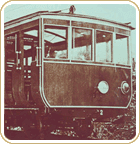
The tramway was officially operated by Governor, Sir William Des Voeus in May 1888 The wooden tram's haulage system was powered by coal fired steam boilers.


1926 - 1948
The steam power was replaced by electrically-powered haulage gear system. Each tram car could carry 52 passengers.


1948 - 1959
After World War2, the local population of Hong Kong increased sharply and a 62 seat, all-metal tramcar was introduced in order to fulfill the increasing demand of transportation.


1959 - 1989
A fully enclosed, lightweight and all-aluminum tram car with 72 seats replaced the metal tram car to ensure the passengers’ safety.


1989 - present
A significant modernization of the system was undertaken, introducing microprocessor-control technology and brand new tramcars carrying 120 passengers.


My Reflection
Peak Tram is one of the oldest transportations in Hong Kong. It is a famous tourist attraction at Hong Kong because they can enjoy the wonderful view of Victoria Harbor. Apart from tram, although we can go to the Peak either by bus or minibus, I love travel by peak tram because it is a unique experience for my whole life. Peak tram is the only transport that there is an angle when you go up and it just like you are riding on the roller coaster and you are going to the highest point of the ride. I love this ride and I hope that I can use that more oftern.
--- Jovy Tam


Saturday, October 9, 2010

Building – Blue House


The first Hong Kong heritage that we want to let you know is
----Blue House----!!!!^^
Hope you like it~~
                           

  Introduction
"Blue House", situated at 72 Stone Nullah Lane in Wanchai, is a pre-war building with more than seventy years of history that shows architectural characteristics of both Chinese and Western styles. Many of the internal structures like purlin, staircase, railing are still preserved in their authentic wooden fabric. There are still residents living inside and some of them have to share the kitchen. Since there is no flushing toilet facility inside the building, it still needs the service of "Tao Ye Heung" (somebody helps to remove the excrement from the building every night)!

Where does the name of "Blue House" come from?
"Blue House" is a four-storey building, which is named from the brilliant blue colour painted on its external walls. When we come closer to the building, it is not difficult to recognize that not all the external walls are coloured in blue! It was said that the workers of the Lands Department only got blue paint during the period of repairing work, so it was used to renovate the external wall at the time.


The future of Blue House
It will have a development and it's content is below.


Here is the video of animation for Blue House Development.

To know more about Blue House, please click it.^^


http://www.youtube.com/watch?v=9EWFaNEaftc&feature=youtube_gdata

Our Feelings
In Hong Kong, Wan Chai is one of the districts with the earliest development and has lots of heritage there. Nowadays, there are still many heritages (include old buildings and streets which sustain the nostalgic atmosphere in the district.) One of the famous old buildings and representative in Wai Chai is---‘Blue House’. I had gone there around 3 times, I think that is very unique for me; it is because the building was painted blue color. And the interesting thing is that there is no flushing toilet inside, it still needs the service of "Tao Ye Heung" which means that some people will helps to remove the excrement from the building every night! We can not find this activity in Hong Kong nowadays. I think people who visit Wai Chai should go there to feel that atmosphere.                                       
                                                                                       ---Change Kwok

‘Blue House’ is one of the amazing places that I have visited. After visiting there, you can know about how people lived in the past and you can feel that the culture there is different from town centre. It makes me remember that I had used the old mail box when I was young too. I am happy because of this memory. Also, other attractive point is that the whole building is using blue color. This is the only one of Hong Kong building which is using that bright color. Next to it, you can also see the green and yellow house. It just likes a colorful picture in front of you. Beside, the wood stairs are also attracted. However, I am so nervous when I was walking.  
                                                                             --- Mable Chiu


Reference Links
Hong Kong Housing Society
Leisure and Cultural Services Department